

Despite growing resistance within the U.S. Senate against a potential war with Iran, Israeli Prime Minister Benjamin Netanyahu may well drag the United States into conflict through a carefully orchestrated provocation blamed on Tehran.
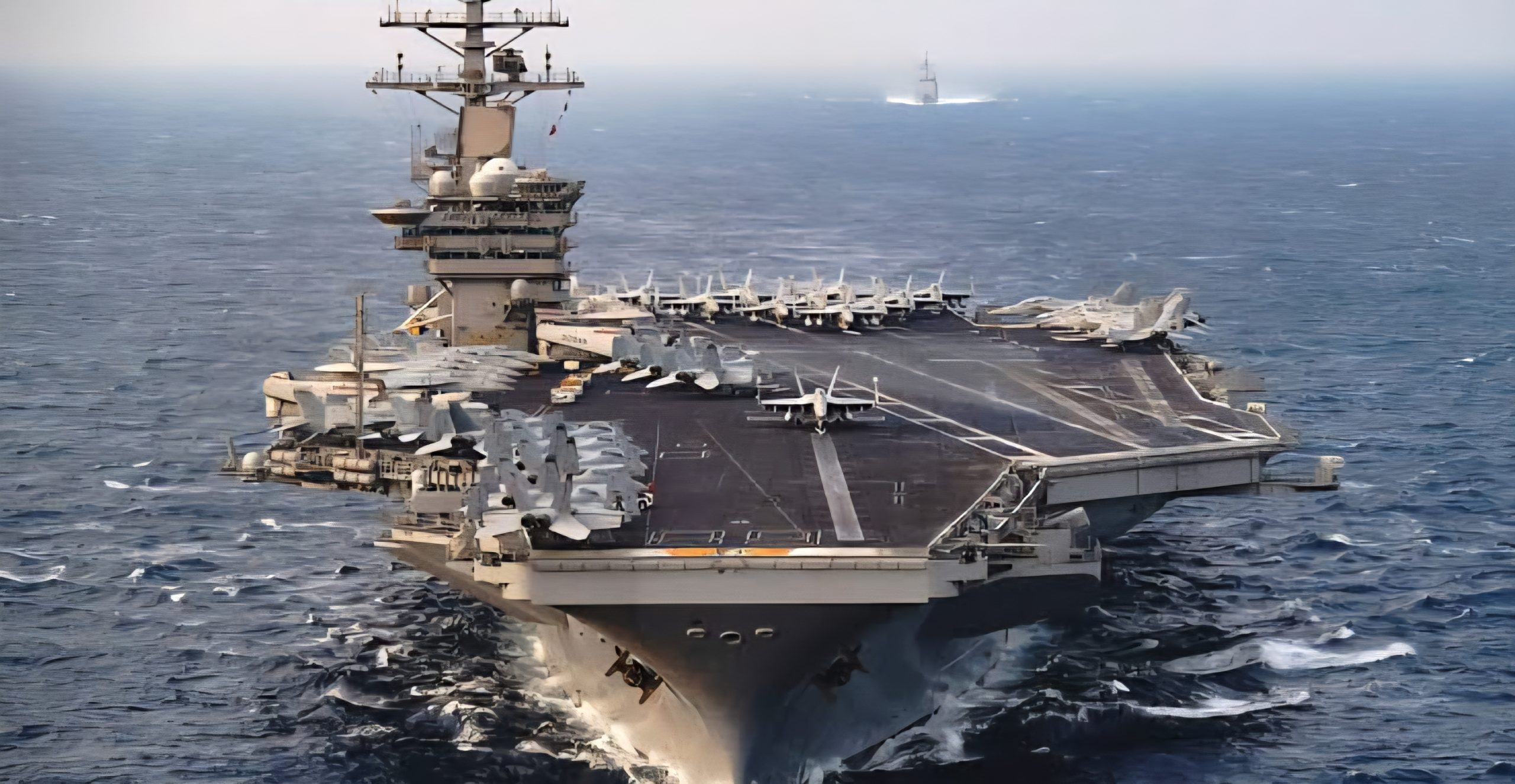
Amid intensifying tensions near the Strait of Hormuz, which Iran has been gradually tightening control over for a week, the U.S. Navy appears poised for action. The USS Nimitz, rumored to be on its final mission before decommissioning, may play a pivotal role in an escalation that could target Iranian nuclear sites.
Bushehr in the Crosshairs
One potential strike is already being discussed at the highest levels. President Donald Trump has reportedly asked his advisers for a feasibility plan to bomb Iran’s Bushehr nuclear plant in an attempt to dismantle the country’s atomic ambitions. However, such a strike could have dire consequences. Alexei Likhachev, CEO of Russian nuclear agency Rosatom, warned that the outcome might surpass the devastation of the Chernobyl disaster.
Trump’s War Blueprint Unfolds
The divergence in ultimate goals between Trump — seeking to block Iran from acquiring nuclear weapons — and Netanyahu — intent on regime change — is unlikely to hinder their cooperation. Cracks are beginning to show within Trump’s own political base as radical elements gain influence, pushing him toward an aggressive foreign policy. Many analysts now view escalation as inevitable.
Saving Netanyahu… Through Chaos
For both Trump and Netanyahu, a military conflict may serve as a convenient diversion from their domestic woes. Netanyahu faces political gridlock in the Knesset and could be forced to call early elections within six months. Having alienated his far-right allies over a controversial conscription law targeting ultra-Orthodox Jews, Netanyahu may find war a useful tool to rally support and delay political reckoning.
Trump’s “Little War” Strategy
President Trump is increasingly cornered. Legal troubles, abandoned reform plans, and a growing list of estranged allies — including a public falling-out with Elon Musk — have weakened his standing. Even his inner circle, like JD Vance, has grown conspicuously silent. Trump’s public discourse has become erratic and unreadable — a sign he has lost touch with the American heartland. Faced with mounting pressure, war may appear to him as the simplest political remedy, following a pattern more often associated with Democratic hawks.
Putin Steps into the Void
Meanwhile, Iran’s key allies — China and Russia — remain measured, watching events unfold while condemning Israel’s attacks as unjustified. Both nations have warned the U.S. against entering the conflict on Israel’s side. Russia, which has deep ties with both Israel and Iran and hosts a large population of Israeli origin, has offered to mediate. President Vladimir Putin even pledged Russia’s guarantee over the peaceful nature of Iran’s nuclear program.
Netanyahu’s Endgame: Controlled Chaos
Yet, Moscow’s proposal is unlikely to resonate with Netanyahu, whose objectives go far beyond nuclear containment. The Israeli leader now openly seeks to overthrow the Iranian regime — a move reminiscent of U.S.-led interventions in Iraq, Syria, and Libya that ultimately destabilized entire regions and gave rise to terrorist groups. Regional powers remain deeply wary of repeating that catastrophic cycle.
Ironically, the Israeli aggression has served to unite the Iranian people — including segments of the opposition — who staunchly reject any foreign intervention or military presence on Iranian soil.
As observers brace for possible U.S. strikes on Iran in the coming days, fears of a broader conflagration across the Middle East are mounting. What began as political survival strategies by two embattled leaders may soon engulf an entire region in flames.
